
Seabirds · Laridae
Peruvian tern
Sternula lorata Philippi & Landbeck, 1861
Spanish: Gaviotín peruano
- Names in Peru
- Gaviotín peruano
- Peruvian Register of Marine Species
- Listed in PeRMS (IMARPE)

Species account
Summary
Sternula lorata is a tern of the family Laridae, described by Philippi and Landbeck in 1861 [1]. In Peru it is called «gaviotín peruano» [2]. It is a bird of the Humboldt Current that, unlike other seabirds, breeds in the coastal desert; at Paracas its nests lay between 1 and 3.7 km from the sea [3]. It nests on the coast of Peru and northern Chile [4], and Peru's official list of threatened wildlife approved in 2014 places it in the Endangered category [5].
Identification and similar species
It is among the smallest terns: about 23 cm in total length, with chicks reaching a top weight of about 50 g [4]. Its eggs, cream with dark brown spots, blend into the desert floor; at Paracas they averaged 31.84 mm in length and 23.88 mm in width [3]. Chicks up to one day old weighed 6.7 g on average and had beige down with black spots on the head, wings and back, white down on the breast and belly, and pink legs [3].
In the Paracas desert its nest is a plain hollow with no decoration, whereas that of the snowy plover (Charadrius alexandrinus), which breeds in the same area, tends to be lined with pebbles or shell fragments; the plover's eggs are also white with black markings [6].
Distribution and habitat
Between 2003 and 2008 it was recorded at 14 localities on the Peruvian coast, from the San Pedro de Vice mangrove (5° 31′ S) to the Ite wetlands (17° 56′ S), a stretch of about 2200 km [4]. Wandering birds have been reported as far north as Salinas, in Ecuador, and its known southern limit is La Rinconada, in Chile, a few kilometres south of the Mejillones Peninsula [4].
Of those localities, 43 % were coastal wetlands, 36 % desert plains less than 2 km from the sea and 21 % open ocean, up to 45 km offshore [4]. At Paracas the nests lay on flat plains below 100 m in altitude, on coarse sand and salt crust with scattered stones; about 92 % of them were associated with stones, which help to shelter and camouflage the chicks [3].
In 2011 signs of breeding were found on three plains in La Libertad, Río Seco, Pacasmayo and Urricape, including a nest with 2 inactive eggs at Pampa Urricape [7]. In the south, at Pampa El Palo (Ilo, Moquegua), a new colony with a breeding area of about 600 ha was described, where between August 2016 and March 2017 12 active nests were found and from 8 to 324 birds were counted [8].
Biology
Egg-laying is not synchronised and runs from September or October to January or February; colonies usually hold fewer than 10 nests, and each pair lays 1 or 2 eggs, although generally only one chick fledges [4]. At Paracas, between November 2006 and July 2008, 60 nests were located: 59.6 % of clutches had 2 eggs, 36.2 % had one and 2.1 % had three [3].
In the 2006-2007 season at least one egg hatched in 55.6 % of the 27 nests followed [3]. Active nests were 44.18 m to 3.28 km apart, and the birds showed attachment to their breeding ground: 3 nests were used again that season and 7 in the next [3].
In September 2015 geolocators were fitted to 10 incubating adults at Mejillones, Chile, and 3 were recovered the following season [9]. All three birds stayed near Mejillones until 31 December 2015; from January to July 2016 they spent the non-breeding season at various points on the Peruvian coast, such as Paracas, the stretch between Eten and Paraíso or the San Pedro de Vice and Paita area, and perhaps in southern Ecuador, and in July 2016 they returned to Mejillones [9]. The data showed no second nesting away from Mejillones [9].
Ecology
At 7 of the 15 colonies checked in northern Chile between 2008 and 2018, 146 fish were collected beside the nests; the commonest were Scomberesox saurus and Trachinotus paitensis, with 42 specimens each, and they measured 36 to 192 mm in standard length, 73 mm on average [10]. In 14 regurgitations from chicks Engraulis ringens predominated (35.7 %), followed by Sardinops sagax (21.4 %), and small squid also turned up; one adult regurgitated the remains of 8 euphausiids of the genus Euphausia [10].
Its main predators are foxes of the genus Pseudalopex and gulls of the genus Larus [4]. At Paracas the birds were most active between 6:00 and 9:00 and then all but vanished from the desert; the peregrine falcon (Falco peregrinus), the variable hawk (Buteo polyosoma) and the turkey vulture (Cathartes aura) were also seen there, but only one failed hawk attack and one nest with fox tracks were documented [6].
Conservation
In Peru it is classified as Endangered [5]. The 283 birds recorded between 2003 and 2008 at 14 localities were counted over a surveyed area of some 1388 ha, just 0.35 % of the area suitable for nesting along the Peruvian coast, so that figure probably falls short [4]. On the Paracas Peninsula up to 605 birds were counted in May 2007, 550 adults and 55 juveniles, and 37 nests in the 2006-2007 season, figures that exceed those reported for other localities [6].
The threats identified in Peru are recreational use of beaches, cars driven off the tracks, pollution of wetlands and the diversion of their water for irrigation, turning desert plains into farmland, control of water levels in wetlands, feral cats and dogs, and the search for oil [4]. Former sites such as Puerto Viejo and Mollendo were lost to human disturbance [4].
At Paracas vehicle traffic through the colony is the greatest risk, because it can crush nests, eggs and chicks: 5 nests lay 30 m or less from a track, one of them at 1.5 m, and tracks multiplied after the Pisco earthquake of 15 August 2007 [6]. The 2025-2030 Master Plan of the Paracas National Reserve treats it as a priority species and lists as pressures vehicles driven in prohibited zones, small-scale fishing and the gathering of aquatic resources [2].
To reduce these conflicts it has been proposed to limit vehicles on beaches during the breeding season, mark trails, put up signs, run education in nearby towns and give legal protection to Pacasmayo, Tres Hermanas-Yanyarina and Paraíso [4]. At the Pampa El Palo colony the threats observed were human in origin: motor vehicle traffic, local fishers passing through and domestic dogs [8].
Where to see it in Peru
The Paracas Peninsula, in the Paracas National Reserve, holds the colonies of Pampa Lechuza and Pampa Atenas-Cequión, where in the 2006-2007 season more nests and birds were found than at other localities studied [6]. Its breeding area in the coastal desert is restricted: the Master Plan allows surveillance, control and biological monitoring by reserve staff there; research, photography and filming only exceptionally and with prior authorisation from the reserve headquarters; and motor vehicles only in exceptional cases [2].
References (10)
- WoRMS Editorial Board (2026). Sternula lorata (Philippi & Landbeck, 1861). World Register of Marine Species. https://www.marinespecies.org/aphia.php?p=taxdetails&id=567828 (accessed 2026-10-20)
- Servicio Nacional de Áreas Naturales Protegidas por el Estado (2025). Plan Maestro de la Reserva Nacional de Paracas 2025-2030. SERNANP, RPE N.° 000173-2025-SERNANP/PE. https://cdn.www.gob.pe/uploads/document/file/9233322/7577103-21-plan-maestro-rnp-2025-2030-f-f-1-f-f.pdf (accessed 2026-10-20)
- Amorós Kohn, S., Saravia Guevara, P., Williams, M. (2010). BIOLOGÍA REPRODUCTIVA DE Sternula lorata, “GAVIOTÍN PERUANO”, EN LA RESERVA NACIONAL DE PARACAS (RNP), ICA – PERÚ. Ecología Aplicada, 125-132. doi:10.21704/rea.v9i1-2.402 (accessed 2026-10-20)
- Zavalaga, C.B., Hardesty, J., Mori, G.P. et al. (2009). Current status of Peruvian Terns Sternula lorata in Perú: threats, conservation and research priorities. Bird Conservation International, 175-186. doi:10.1017/S0959270908008332 (accessed 2026-10-20)
- Ministerio de Agricultura y Riego (2014). Decreto Supremo N.° 004-2014-MINAGRI: actualización de la lista de clasificación y categorización de las especies amenazadas de fauna silvestre legalmente protegidas. El Peruano (08-04-2014); ficha en SINIA, Ministerio del Ambiente. https://sinia.minam.gob.pe/normas/lista-especies-amenazadas-fauna-silvestre-legalmente-protegidas (accessed 2026-10-20)
- Amorós, S., Saravia, P. (2012). APORTES A LA CONSERVACIÓN DE Sternula lorata, “GAVIOTÍN PERUANO”, EN LA RESERVA NACIONAL DE PARACAS (RNP), ICA – PERÚ. Ecología Aplicada, 47-57. doi:10.21704/rea.v11i1-2.425 (accessed 2026-10-20)
- Amorós K., S. (2011). INDICIOS DE NUEVOS SITIOS REPRODUCTIVOS DEL GAVIOTÍN PERUANO, STERNULA LORATA (CHARADRIIFORMES, LARIDAE) EN LA LIBERTAD, PERÚ, E IMPLICANCIAS PARA SU CONSERVACIÓN. The Biologist (Lima), 177-192. doi:10.24039/rtb201192492 (accessed 2026-10-20)
- Vizcarra, J.K., Vilina, Y.A., Anfruns, K. (2022). Nueva colonia reproductiva del gaviotín peruano (Sternula lorata) en la costa sur de Perú. Revista Peruana de Biología, e22850. doi:10.15381/rpb.v29i3.22850 (accessed 2026-10-20)
- Ryan, T.P., Olmedo Barrera, B., Hernández Aquez, S. et al. (2022). Movements and Asynchronous Nesting of the Peruvian Tern Sternula lorata in Chile and Peru. Marine Ornithology, 63-69. doi:10.5038/2074-1235.50.1.1461 (accessed 2026-10-20)
- Vilina, Y.A., Pastenes, L., Munizaga, B. et al. (2024). Fish Prey of the Peruvian Tern Sternula lorata along the Northern Coast of Chile. Marine Ornithology, 45-49. doi:10.5038/2074-1235.52.1.1558 (accessed 2026-10-20)
More pictures
Photo: David F. Belmonte · CC BY 4.0 · GBIF (iNaturalist research-grade observations) Photo: Nicolás Villaseca Merino · CC BY-SA 4.0 · GBIF (iNaturalist research-grade observations)
If you come across it
Protected or threatened species. Watch it without touching, feeding, chasing or taking it, and keep the recommended viewing distances.national category: Endangered (EN) — Supreme Decree No. 004-2014-MINAGRI, classification of threatened wild fauna species (El Peruano, 8 April 2014), p. 7 of the PDF
Where it has been recorded
- Filled: scientific records, or confirmed by a curator
- Hatched: isolated record
- Dotted outline: no scientific records and no curator's confirmation (an ORKA sighting is not drawn here)
- Tropical northern sea
Scientific records (10 records)
- Tropical–cold transition zone
Scientific records (188 records)
- Cold central sea
Scientific records (742 records)
- Cold southern sea
Scientific records (1388 records)
From openly licensed OBIS and GBIF records (CC0 or CC BY). How each list is built.
Related species
From the same family.
Swallow-tailed gull
Creagrus furcatus
IUCN status: LC · Least Concern
Inca tern
Larosterna inca
IUCN status: NT · Near ThreatenedProtected in Peru
Kelp gull
Larus dominicanus
IUCN status: LC · Least ConcernLeucophaeus modestus
IUCN status: Not evaluated
Belcher's gull
Larus belcheri
IUCN status: LC · Least ConcernFranklin's gull
Larus pipixcan
IUCN status: LC · Least Concern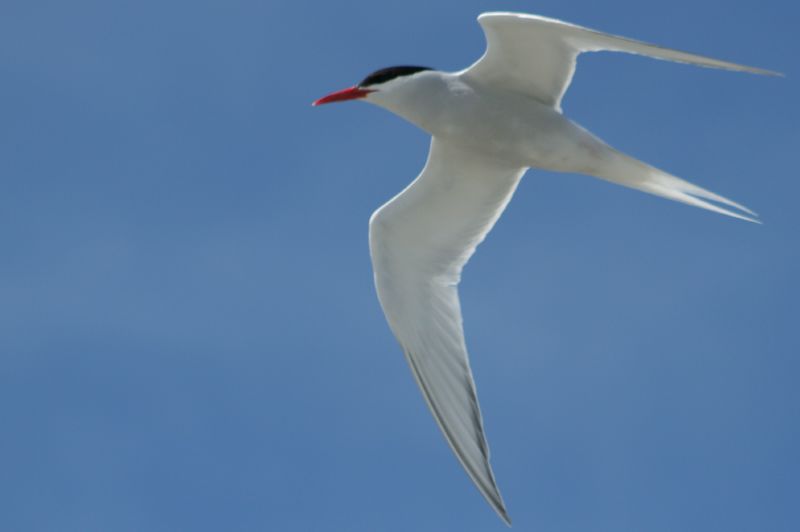
South American tern
Sterna hirundinacea
IUCN status: LC · Least ConcernProtected in Peru
Common tern
Sterna hirundo
IUCN status: LC · Least Concern
Names and sources
In Spanish
- Gaviotín peruano — Peru; SERNANP (2025). Plan Maestro de la Reserva Nacional de Paracas 2025-2030. RPE N.° 000173-2025-SERNANP/PE, p. 23 of the PDF · main name
- Charrancito peruano — Wikidata
In English
- Peruvian tern — WoRMS; Wikidata
Classification
Learn more
Conservation status: no data (IUCN). Taxonomy: PeRMS / WoRMS (CC BY 4.0).