
Crabs, lobsters and shrimps · Porcellanidae
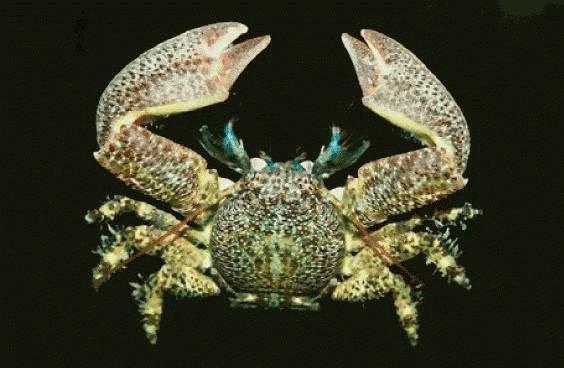
Petrolisthes granulosus
Petrolisthes granulosus (Guérin, 1835)
- Peruvian Register of Marine Species
- Listed in PeRMS (IMARPE)
Species account
Summary
Petrolisthes granulosus is a porcelain crab of the family Porcellanidae [1]. It lives under stones and boulders on rocky intertidal shores of the south-eastern Pacific; the literature gives its range from Paita, in Peru, to south-central Chile [2],[3]. It is small: the largest males at El Tabo reached 16.9 mm carapace length and the largest females 13.3 mm [2]. Its larvae pass through a prezoea, two zoeal stages and a megalopa [4]. In Chile it has been used to compare populations along a temperature gradient [5].
Identification and similar species
In 1960 Haig separated Petrolisthes granulosus from Petrolisthes laevigatus after a careful comparison of the original descriptions of the two [2]. Among the distinguishing characters, the carapace of Petrolisthes granulosus bears granules elongated crosswise, the antennal flagellum is bare (with only vestigial hairs) and the rostrum has a median cleft [2].
The male has the genital pore on the coxa of the fifth walking leg and the female on that of the third. Females lack the first pair of pleopods, which males keep [2]. Males grow larger: the largest male measured 16.9 mm carapace length and the largest female 13.3 mm among 20141 specimens examined at El Tabo [2]. At Iquique the colour of the egg mass was described as purple, reddish-purple or orange-purple depending on the embryonic stage [6].
Similar species
- Petrolisthes laevigatus: Its carapace is almost smooth, the antennal flagellum and the outer half of the hand carry long hairs, and the rostrum has no median cleft [2].
- Petrolisthes violaceus: Its carapace and thoracic appendages are violet, against the greenish colour of Petrolisthes granulosus; the two live together at the lower edge of the intertidal [2].
Distribution and habitat
According to the compilation by Sanhueza and colleagues, the species ranges from Paita, in Peru, to south of San Vicente Bay in Chile, and also includes the Juan Fernández Islands [2]. Hernáez gives it from Paita to Coronel, citing Haig (1960) and Retamal (1981) [3]. Monaco and colleagues place it between 5° and 36° S [5]. For Peru that compilation lists records from Paita, Ancón, Callao and the Chincha Islands [2].
It is a crab of the middle and upper intertidal that shelters under boulders and cobbles to escape heat, drying out and terrestrial predators [5]. At El Tabo it was very abundant in the supratidal zone, under large blocks, especially where organic debris piles up with the surf; water temperature there ranged from 11.5 to 18 °C [2]. At Iquique the animals clustered under large boulders regardless of sex or size [6].
Biology
At El Tabo females with eggs were found all year round. Their frequency peaked in spring, at 62.5 % in September, and was lowest in April. The smallest ovigerous female measured 4.6 mm carapace length, and clutch size grows with body size: about 75 eggs at 4.6 mm and an average of 640 at 11 mm [2]. Eggs measured between 620 and 980 microns in diameter [2].
At Iquique, 79 ovigerous females of 4.3 to 8.0 mm carried between 55 and 315 eggs. During incubation each egg grew 45.8 % in volume, through water uptake, while its dry weight fell 24.3 %; reproductive output was close to 10 % [6]. At five localities in northern Chile, between 18°33' and 25°20' S, 483 ovigerous females produced 15 to 516 eggs, and the size at first maturity ranged from 4.3 mm at Arica to 5.7 mm at Tocopilla [3].
Larval development, reared in the laboratory at 15-16 °C, comprises a prezoea, two zoeal stages and a megalopa, which appeared after 26 days [4]. An analysis of 25 stomach contents found plant remains, few diatoms, nematodes and sand grains, so the authors regard it as a detritus feeder [2]. Another study states that it filter-feeds [5].
Ecology
At El Tabo the sex ratio was close to 1:1 (10290 males and 9766 females) and density ranged from 0 to 948 individuals per square metre, with a maximum biomass of 325 g per square metre [2]. It shares its shelter under the stones with the crab Cyclograpsus cinereus and the snail Diloma nigerrima [2]. At Iquique the accompanying fauna included echinoderms, gastropods, anemones, other crabs and Petrolisthes violaceus [6].
Living high on the shore, it endures high temperatures at every low tide. Monaco and colleagues recorded, under boulders and cobbles of the high intertidal between December 2006 and February 2007, maximum temperatures of 26.3 °C at Iquique, 21.1 °C at Coquimbo and 19.1 °C at Concepción. In Iquique crabs exposed to 26 °C, metabolic rate tripled compared with the rate at the average low-tide temperature; those from the other two localities regulated their metabolism [5].
Toward the south the animals were larger, their eggs bigger and their size at maturity greater [5]. In northern Chile, Hernáez likewise saw fecundity, size at maturity and reproductive output tending to rise toward the south, which runs against what classic authors expected [3].
Where to see it in Peru
The literature consulted places the species in Peru at Paita, Ancón, Callao and the Chincha Islands, with old records (from 1838 to 1892) that Sanhueza and colleagues compiled in 1975 [2]. The authors who collected it lifted stones by hand in the supratidal and intertidal zones [2], and the species shelters under boulders and cobbles in the middle and upper shore [5]. The sources consulted mention neither access restrictions nor recent observation data for specific Peruvian sites [2],[3].
References (6)
- WoRMS Editorial Board (2026). Petrolisthes granulosus (Guérin, 1835). World Register of Marine Species. https://www.marinespecies.org/aphia.php?p=taxdetails&id=431851 (accessed 2026-10-25)
- Sanhueza, E., Bahamonde, N., López, M.T. (1975). Petrolisthes granulosus (Guérin) en biocenosis supramareales de El Tabo (CRUSTACEA DECAPODA, ANOMURA). Boletín Museo Nacional de Historia Natural, 121-136. doi:10.54830/bmnhn.v34.1975.526 (accessed 2026-10-25)
- Hernáez Bové, P. (2001). Producción y rendimiento reproductivo en Petrolisthes granulosus (Decapoda, Anomura, Porcellanidae) en diferentes localidades del norte de Chile: Una comparación latitudinal. Investigaciones marinas, 73-81. doi:10.4067/s0717-71782001000100007 (accessed 2026-10-25)
- Saelzer, H.E., Quintana, R., Quiñones, R. (1986). Larval Development of Petrolisthes granulosus (Guerin, 1835) (Decapoda: Anomura: Porcellanidae) under Laboratory Conditions. Journal of Crustacean Biology. doi:10.2307/1548393 (accessed 2026-10-25)
- Monaco, C.J., Brokordt, K.B., Gaymer, C.F. (2010). Latitudinal thermal gradient effect on the cost of living of the intertidal porcelain crab Petrolisthes granulosus. Aquatic Biology, 23-33. doi:10.3354/ab00223 (accessed 2026-10-25)
- López, L., Jeri, T., González, C. et al. (1997). Fecundidad y esfuerzo reproductivo de Petrolisthes granulosus (Guérin, 1835) en Iquique, Chile (Decapoda, Anomura, Porcellanidae). Investigaciones marinas, 159-165. doi:10.4067/s0717-71781997002500011 (accessed 2026-10-25)
More pictures
Where it has been recorded
- Filled: scientific records, or confirmed by a curator
- Hatched: isolated record
- Dotted outline: no scientific records and no curator's confirmation (an ORKA sighting is not drawn here)
- Cold southern sea
Scientific records (3 records)
From openly licensed OBIS and GBIF records (CC0 or CC BY). How each list is built.
Related species
From the same genus (Petrolisthes).
Green porcelain crab
Petrolisthes armatus
IUCN status: Not evaluated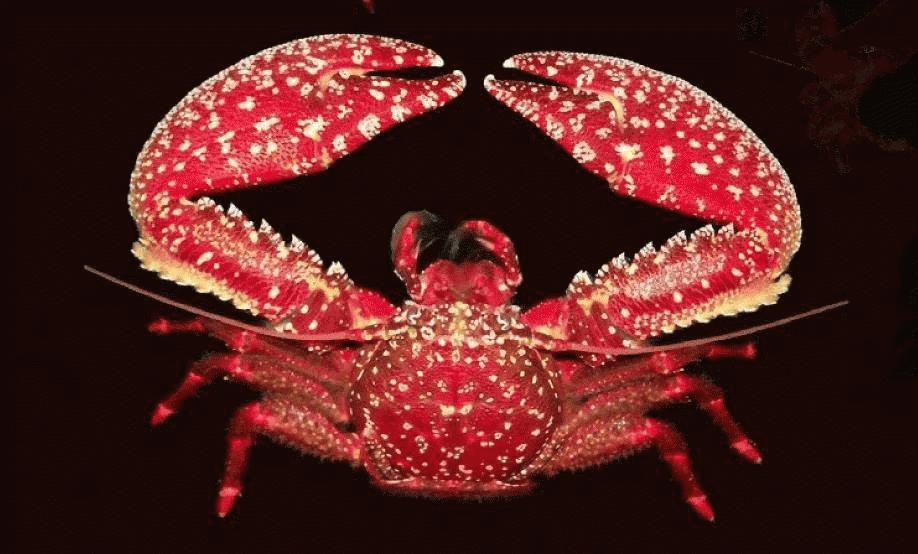
Petrolisthes desmarestii
IUCN status: Not evaluated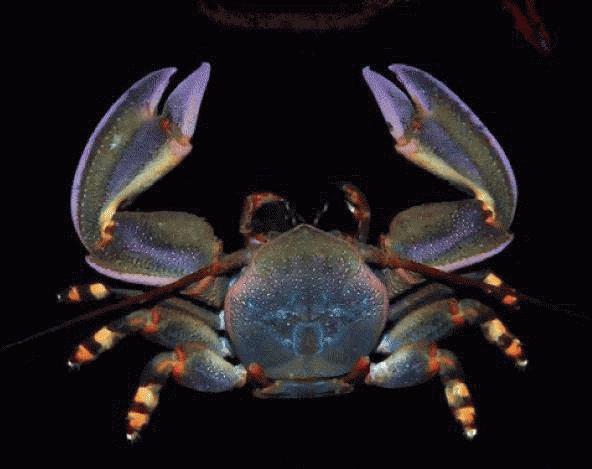
Petrolisthes violaceus
IUCN status: Not evaluatedPetrolisthes edwardsii
IUCN status: Not evaluated- No openly licensed image yet
Petrolisthes haigae
IUCN status: Not evaluated 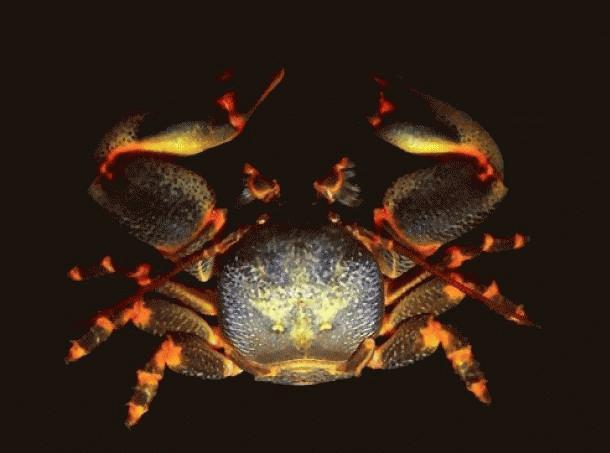
Petrolisthes laevigatus
IUCN status: Not evaluated- No openly licensed image yet
Petrolisthes lewisi
IUCN status: Not evaluated - No openly licensed image yet
Petrolisthes ortmanni
IUCN status: Not evaluated
Names and sources
Classification
Learn more
Conservation status: no data (IUCN). Taxonomy: PeRMS / WoRMS (CC BY 4.0).