
Seabirds · Procellariidae
Northern giant petrel
Macronectes halli Mathews, 1912
Spanish: Petrel gigante norteño
- Names in Peru
- Petrel gigante norteño · Petrel gigante del norte
- Peruvian Register of Marine Species
- Listed in PeRMS (IMARPE)

Species account
Summary
Macronectes halli is a seabird of the family Procellariidae, described by Mathews in 1912 [1]. In Peru it is called «petrel gigante norteño» [2] and also «petrel gigante del norte» [3]. It is one of the two giant petrels, the only species in their genus, and breeds mainly on sub-Antarctic islands lying north of the Antarctic Polar Front [4],[5]. Young birds travel thousands of kilometres and since at least 2002 have visited Peru's central and southern coast regularly, mostly between winter and spring [6],[7]. The IUCN Red List classifies it as Least Concern in its 2018 assessment [8], and Peru's official list of threatened wildlife, approved in 2014, places it in the Near Threatened category [2].
Identification and similar species
It is a large petrel: juveniles weigh on average about 3.6 kg [7]. Giant petrels show the greatest size difference between the sexes of any seabird, and males weigh around 20 % more than females [9].
The feature that best separates it from its sister species is the horny plate at the bill tip, the nail or unguis, which is reddish at every age [6]; in adults that plate is dark red [4]. Fledglings of both species leave the nest in an identical blackish plumage that later fades to brown, and by then they already show the adult bill colour [10].
Immatures are a uniform blackish brown, whereas breeding adults have a mottled brown crown and nape and a whitish face and throat with a blurred edge [6]. Off Peru, nearly all birds seen are juveniles in uniform dark plumage; the few subadults are recognised by some white feathers on the head and breast [7].
Similar species
- Macronectes giganteus: The southern giant petrel has a greenish bill tip that at a distance does not usually contrast with the rest of the bill, whereas in Macronectes halli it is reddish at every age [6].
Distribution and habitat
It has a circumpolar distribution in the Southern Ocean and breeds on a handful of sub-Antarctic islands: South Georgia, the Prince Edward and Marion islands, Crozet, Kerguelen, Macquarie and the Chatham, Auckland, Antipodes and Campbell islands [6]. The largest colony is on South Georgia, with 15398 breeding pairs, over 70 % of the world total; next come the Forty Fours islets in the Chatham archipelago (about 1977 pairs), Macquarie (about 1793), Kerguelen (1400) and Crozet (1263) [7].
Adults tracked with geolocators from Crozet and Kerguelen stayed in the Indian Ocean all year, while juveniles tagged as they left the nest always travelled east and made at least one full circuit around Antarctica in their first year [9]. Band recoveries show that juveniles disperse between 25° S and 55° S, and most have been recovered in Australia and New Zealand [6].
The first published report of the species in Peruvian waters describes 7 juveniles seen in July and August 2004 near Punta San Juan, the port of Ilo and La Vieja island [10]. Between 2002 and 2007 immatures were seen off Callao, then the northernmost point known for the species, always between August and December [6].
On 35 IMARPE research cruises made between 1998 and 2020, 34 individuals were seen between 9° S and 18° S, 20 to 199 km from the coast; 84 % in winter and spring, none in summer and none north of 9° S, in waters of 15 to 20 °C [7]. Adding records from other sources, of 63 sightings 55.6 % were over the continental slope, 15.9 % over the shelf, 11.1 % over the Peru-Chile Trench, 9.5 % in coastal waters and 7.9 % over the abyssal plain [7]. The authors reckon these birds are about 7000 km from South Georgia, about 13000 km from Macquarie and about 21000 km from Crozet, and think it most likely that they originate from the New Zealand islands, Macquarie and the southern Indian Ocean [7].
Biology
Giant petrels are long-lived, mature late, breed slowly and have high adult survival, so any added mortality hits them hard [9]. It lays a single egg a year, and on average 30 % of the adults that could breed do not do so in a given season [5]. Unlike the southern giant petrel, it does not form colonies and prefers to nest in places with more plant cover [5].
It breeds from July to February; chick-rearing nearly always ends in early March, and the fledglings leave the nest in March [10]. It breeds up to 6 weeks earlier than the southern giant petrel, and that difference in timing, together with breeding behaviour, keeps the two species apart where they breed together [5].
Even so, the isolation is not complete. On Bird Island, South Georgia, every mixed pair between the two species recorded in the study, from 1978-1979 to 2011-2012, was a male southern giant petrel with a female of this species, and a hybrid male raised 5 chicks with the same female of this species; between 2002-2003 and 2011-2012, the mean breeding success of this species' pairs on that island was 57.3 % [4].
Ecology
It is an opportunistic scavenger and hunter. Males dominate carcasses and feed heavily on land on dead penguins and seals, and at sea on dead cetaceans, although both sexes also eat crustaceans and fish [9]. The management plan of the Dorsal de Nasca National Reserve records that it takes prey at the surface, dives just below it and can plunge to 2 m, and that its diet includes seal carrion, adult macaroni penguins, krill, squid, small burrowing petrels, whale carcasses, dead albatross chicks, ship waste and seaweed [3].
In adults, behavioural differences are larger between males and females than between the two species: outside the breeding season females range further and spend more time sitting on the water, while males stay near the colony [9]. Carrion is key during the chicks' first weeks; on Bird Island, according to unpublished data reported in that review, a rise of about 60 % in the breeding population between 1978 and 1996 coincided with a tripling of Antarctic fur seals [5].
Off Peru it has been seen eating a dead bird on the water and following a longliner off Ilo [6]. In the artisanal jumbo squid fishery of the south of the country, 4 juveniles approached the boats when squid offal was thrown overboard, and on another occasion one was seen feeding alongside 3 white-chinned petrels over the slope, 30 km off Chala [7].
Conservation
Its global category is Least Concern [8]. In Peru it is classified as Near Threatened on the official list of threatened wildlife species [2]. It has also been listed in Appendix II of the Bonn Convention on migratory species (CMS) since 1999 [11].
A compilation of censuses up to the 1999-2000 season put the world breeding population at about 11210 pairs, 30 % more than the earlier estimate of 8600 pairs, with increases mainly on Macquarie, the Prince Edward Islands and Bird Island, though with declines at other localities as well [5]. A later estimate, cited in 2015, gives 11800 pairs [4].
Juveniles, which roam the whole Southern Ocean in their first year, coincide with many longline fisheries, and the adult females of this species tracked from Crozet and Kerguelen overlapped most with longliners, above all high-seas tuna longliners [9].
In the southeast Pacific, a 2.5-year-old juvenile banded on Macquarie was hooked in June 2002 on a Peruvian shark longline about 150 km off Tocopilla, Chile, 10700 km from its colony, and another was hooked and released alive off Ilo in late 2004 [6]. According to workshops held for the Dorsal de Nasca National Reserve, petrels are caught incidentally during fishing [3].
Human relevance
Fishers from the port of Ilo have said that they hunt giant petrels, which suggests the species may be commoner in Peruvian waters than published records indicate [10]. Banded birds face an extra risk: it has been suggested that in Chile some fishers kill petrels to keep the bands as curiosities [6].
Several Peruvian records come from birdwatching tourism: the records off Callao were made from pelagic trips run by a birding agency, and the photos were shared online so that experienced observers could confirm the identification [6].
Where to see it in Peru
It is a non-breeding visitor seen mostly offshore and between austral winter and spring: on the IMARPE cruises of 1998 to 2020 it turned up between 9° S and 18° S and never in summer, and 94.2 % of its sightings were in pelagic waters [7]. Off Callao, a pelagic trip in September 2002 saw it some 20 to 35 nautical miles from the port, over depths of 800 to 1400 m; between 2002 and 2007 these trips found it only from August to December, although they run all year [6]. With IMARPE observers aboard jumbo squid boats sailing from Lomas, Atico, La Planchada, Quilca and Matarani between 2015 and 2017, 4 individuals were seen, 3 of them over the continental slope [12].
Closer inshore, in July 2004 3 juveniles were seen from land about 400 m off Punta San Juan and another 3 from a boat 2 km from the port of Ilo; the research at Punta San Juan and on La Vieja island was authorised by PROABONOS [10]. To tell it from the southern giant petrel, look for the reddish bill tip, which is hard to see at a distance [6].
References (12)
- WoRMS Editorial Board (2026). Macronectes halli Mathews, 1912. World Register of Marine Species. https://www.marinespecies.org/aphia.php?p=taxdetails&id=212637 (accessed 2026-10-20)
- Ministerio de Agricultura y Riego (2014). Decreto Supremo N.° 004-2014-MINAGRI: actualización de la lista de clasificación y categorización de las especies amenazadas de fauna silvestre legalmente protegidas. El Peruano (08-04-2014); ficha en SINIA, Ministerio del Ambiente. https://sinia.minam.gob.pe/normas/lista-especies-amenazadas-fauna-silvestre-legalmente-protegidas (accessed 2026-10-20)
- Servicio Nacional de Áreas Naturales Protegidas por el Estado (SERNANP) (2024). Plan Maestro de la Reserva Nacional Dorsal de Nasca 2024-2029. SERNANP; aprobado por RP N.° 000040-2024-SERNANP. https://cdn.www.gob.pe/uploads/document/file/5997712/5313081-anexo.pdf (accessed 2026-10-20)
- Brown, R.M., Techow, N.M.S.M., Wood, A.G. et al. (2015). Hybridization and Back-Crossing in Giant Petrels (Macronectes giganteus and M. halli) at Bird Island, South Georgia, and a Summary of Hybridization in Seabirds. PLoS ONE, e0121688. doi:10.1371/journal.pone.0121688 (accessed 2026-10-20)
- Patterson, D.L., Woehler, E.J., Croxall, J.P. et al. (2008). Breeding Distribution and Population Status of the Northern Giant Petrel Macronectes Halli and Southern Giant Petrel M Giganteus. Marine Ornithology, 115-124. doi:10.5038/2074-1235.36.2.780 (accessed 2026-10-20)
- Zavalaga, C.B., Engblom, G., Alfaro-Shigueto, J. et al. (2009). Immature Northern Giant Petrels Macronectes Halli Visiting the Coast of Peru. Marine Ornithology, 237-240. doi:10.5038/2074-1235.37.3.849 (accessed 2026-10-20)
- Quiñones, J., Romero, C., Zavalaga, C. (2021). Vessel survey observations confirm wintering dispersion of northern giant-petrel (Macronectes halli) juveniles in southern-central Perú; what is their origin?. Notornis, 76-85. doi:10.63172//334424xkaxdi (accessed 2026-10-20)
- BirdLife International (2018). Macronectes halli: BirdLife International. The IUCN Red List of Threatened Species 2018: e.T22697859A132609000. doi:10.2305/IUCN.UK.2018-2.RLTS.T22697859A132609000.en (accessed 2026-10-20)
- Thiers, L., Delord, K., Barbraud, C. et al. (2014). Foraging zones of the two sibling species of giant petrels in the Indian Ocean throughout the annual cycle: implication for their conservation. Marine Ecology Progress Series, 233-248. doi:10.3354/meps10620 (accessed 2026-10-20)
- Ayala, L. (2007). Records of juvenile northern giant petrels (Macronectes halli) in Peruvian seas. Notornis, 234-236. doi:10.63172/206412aerfat (accessed 2026-10-20)
- Convention on the Conservation of Migratory Species of Wild Animals (2026). Macronectes halli. CMS species database. https://www.cms.int/en/species/macronectes-halli (accessed 2026-10-20)
- Moreno, C., Quiñones, J. (2022). Albatross and Petrel Interactions with an Artisanal Squid Fishery in Southern Peru during El Niño, 2015-2017. Marine Ornithology, 49-56. doi:10.5038/2074-1235.50.1.1459 (accessed 2026-10-20)
More pictures
If you come across it
Protected or threatened species. Watch it without touching, feeding, chasing or taking it, and keep the recommended viewing distances.national category: Near Threatened (NT) — Supreme Decree No. 004-2014-MINAGRI, classification of threatened wild fauna species (El Peruano, 8 April 2014), p. 9 of the PDF
Where it has been recorded
- Filled: scientific records, or confirmed by a curator
- Hatched: isolated record
- Dotted outline: no scientific records and no curator's confirmation (an ORKA sighting is not drawn here)
- Cold central sea
Scientific records (12 records)
- Cold southern sea
Scientific records (11 records)
From openly licensed OBIS and GBIF records (CC0 or CC BY). How each list is built.
Related species
From the same genus (Macronectes) and from the same family (Procellariidae).

Southern giant petrel
Macronectes giganteus
IUCN status: LC · Least ConcernProtected in PeruArdenna creatopus
IUCN status: Not evaluatedProtected in Peru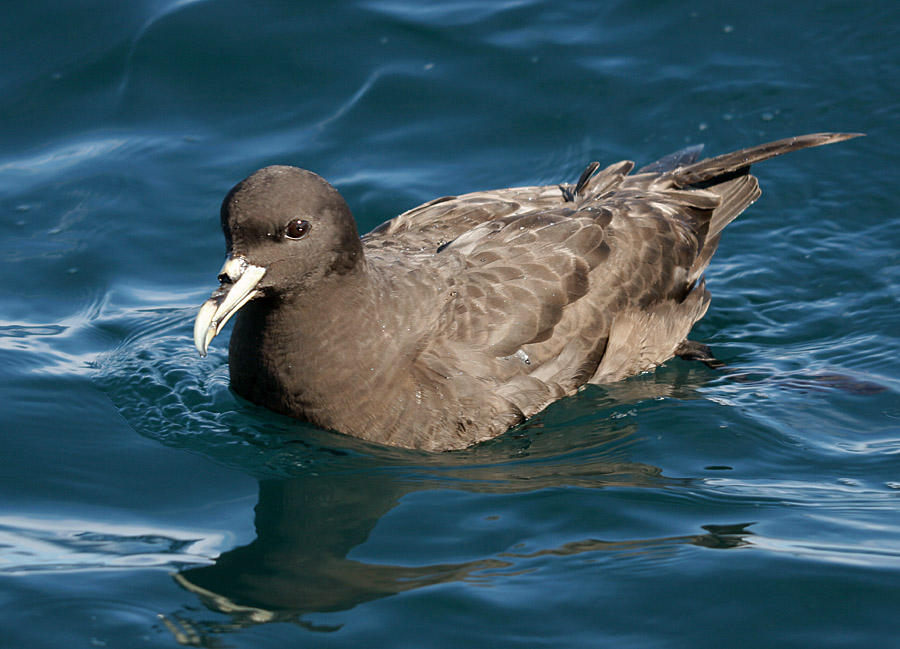
White-chinned petrel
Procellaria aequinoctialis
IUCN status: VU · VulnerableProtected in Peru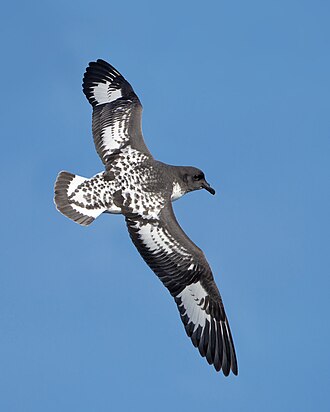
Pintado petrel
Daption capense
IUCN status: LC · Least Concern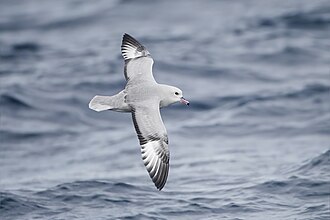
Southern fulmar
Fulmarus glacialoides
IUCN status: LC · Least Concern
Thin-billed prion
Pachyptila belcheri
IUCN status: LC · Least Concern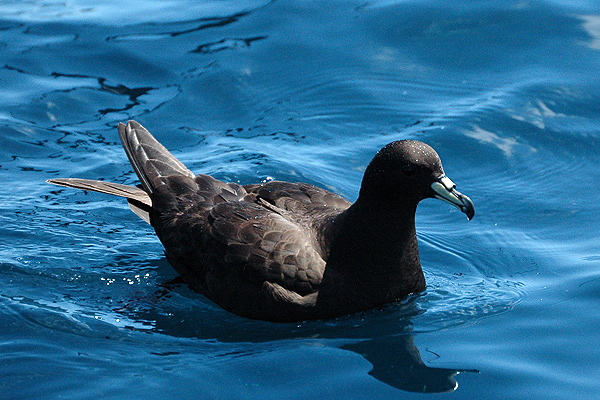
Black petrel
Procellaria parkinsoni
IUCN status: VU · VulnerableProtected in Peru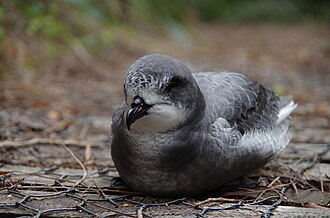
Cook's petrel
Pterodroma cookii
IUCN status: VU · Vulnerable
Names and sources
In Spanish
- Petrel gigante norteño — Peru; D.S. N.° 004-2014-MINAGRI, categorización de especies amenazadas de fauna silvestre (El Peruano, 08-04-2014), p. 9 of the PDF · main name
- Petrel gigante del norte — Peru; SERNANP (2024). Plan Maestro de la Reserva Nacional Dorsal de Nasca 2024-2029. RP N.° 000040-2024-SERNANP, p. 41 of the PDF
In English
- Northern giant petrel — WoRMS; Wikidata
- Nellie — WoRMS
- Stinker — WoRMS
Classification
Learn more
Conservation status: Least Concern (IUCN Red List, according to Wikidata). Taxonomy: PeRMS / WoRMS (CC BY 4.0).