
Marine life guide of Peru · Hiatellidae
Red nose
Hiatella arctica (Linnaeus, 1767)
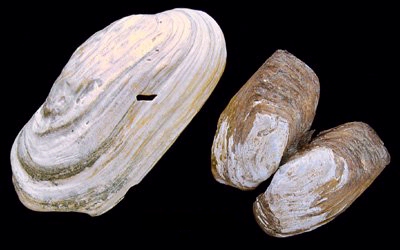
Species account
Summary
Hiatella arctica is a marine bivalve of the family Hiatellidae, order Adapedonta, accepted as a valid name in the World Register of Marine Species [1]. The annotated checklist of Peruvian bivalves places it among the 401 marine species recorded in the country, with a worldwide distribution, and describes it nestling among algal holdfasts [2]. Genetic studies indicate that cryptic diversity hides under this name, so in practice it is a species complex [3].
Identification and similar species
The shell shape of adults changes with the substrate and microhabitat where they live, and this plasticity has complicated their taxonomy; two old names, Hiatella pholadis and Hiatella striata, are now treated as synonyms [3].
In a population from north-east Greenland the largest individual measured about 45 mm in length, while the fitted growth curve gave an asymptotic size close to 37 mm; the authors point out that variable shell shape makes length a poor indicator of growth [4].
What really separates the lineages is DNA, not the shell. In Canada 4 clades were detected, with mitochondrial COI divergence of 11.8 to 23.5 %, which suggests that species status is warranted, and at least 11 taxa are cited for the northern hemisphere [3]. For the 4 cases of deep divergence detected in a barcoding study of Canadian molluscs, among them Hiatella arctica, the estimated divergence ages exceed 900 thousand years [5].
Distribution and habitat
The annotated checklist of Peruvian marine bivalves describes Hiatella arctica as occurring worldwide, possibly spread in part by human activity. In the eastern Pacific it records the species from the Gulf of California to Chile, including Fernandina Island in the Galápagos, and places it from the intertidal zone to a maximum of 1230 m according to that list, nestling among algal holdfasts and on a wide variety of substrates [2].
In a fjord of north-east Greenland it was sampled between 10 and 80 m depth: the highest density occurred at 20 m, with 57 individuals per square metre, and no specimen was found at 80 m. The authors suggest that a lack of suitable substrate may limit its depth range, because the species prefers coarse-grained or stony bottoms [4].
The larvae are planktotrophic, and the low regional divergence of one lineage in Canada may reflect secondary dispersal, such as the transport of juveniles in ballast water and of adults on algal attachment structures [3].
Biology
In Greenland age was estimated by counting annual growth bands in sections of the shell, and the oldest individual was about 126 years old. Growth is slow: the asymptotic size of about 37 mm was reached around 35 years, a slower pace than is typical of bivalves from temperate waters [4].
Its life cycle includes a planktonic larval phase with planktotrophic larvae, a trait that in principle allows broad gene flow among distant populations [3].
Ecology
In the Greenland population body size fell into two groups, one of very small individuals of 6 to 8 mm and another close to the maximum size. The authors attribute this to high mortality below 20 mm, which they propose is mainly due to predation by the brittle star Ophiocten sericeum, and to low mortality in large individuals, which lets old animals accumulate [4].
Peak biomass, at 20 m depth, was 6.2 g of shell-free dry weight per square metre, and the population's carbon demand amounted to 3.6 % of the pelagic production of the outer fjord [4].
Where to see it in Peru
The species appears in the 2016 annotated checklist covering 401 bivalve species of the Peruvian coast, which records it from the intertidal to the archibenthal zone, nestling among algal holdfasts and on various substrates; that source gives no specific Peruvian localities or access difficulties [2].
References (5)
- MolluscaBase eds. (2026). Hiatella arctica (Linnaeus, 1767). World Register of Marine Species. https://www.marinespecies.org/aphia.php?p=taxdetails&id=140103 (accessed 2026-10-25)
- Paredes, C., Cardoso, F., Santamaría, J. et al. (2016). Lista anotada de los bivalvos marinos del Perú. Revista Peruana de Biología, 127-150. doi:10.15381/rpb.v23i2.12397 (accessed 2026-10-25)
- Layton, K.K.S., Martel, A.L., Hebert, P.D.N. (2015). Geographic patterns of genetic diversity in two species complexes of Canadian marine bivalves. Journal of Molluscan Studies, 282-291. doi:10.1093/mollus/eyv056 (accessed 2026-10-25)
- Sejr, M.K., Sand, M.K., Jensen, K.T. et al. (2002). Growth and production of Hiatella arctica (Bivalvia) in a high-Arctic fjord (Young Sound, Northeast Greenland). Marine Ecology Progress Series, 163-169. doi:10.3354/meps244163 (accessed 2026-10-25)
- Layton, K.K.S., Martel, A.L., Hebert, P.D.N. (2014). Patterns of DNA Barcode Variation in Canadian Marine Molluscs. PLoS ONE, e95003. doi:10.1371/journal.pone.0095003 (accessed 2026-10-25)